Why Is My Concrete Apartment Getting Moldy? Condensation and Wind-Driven Rain
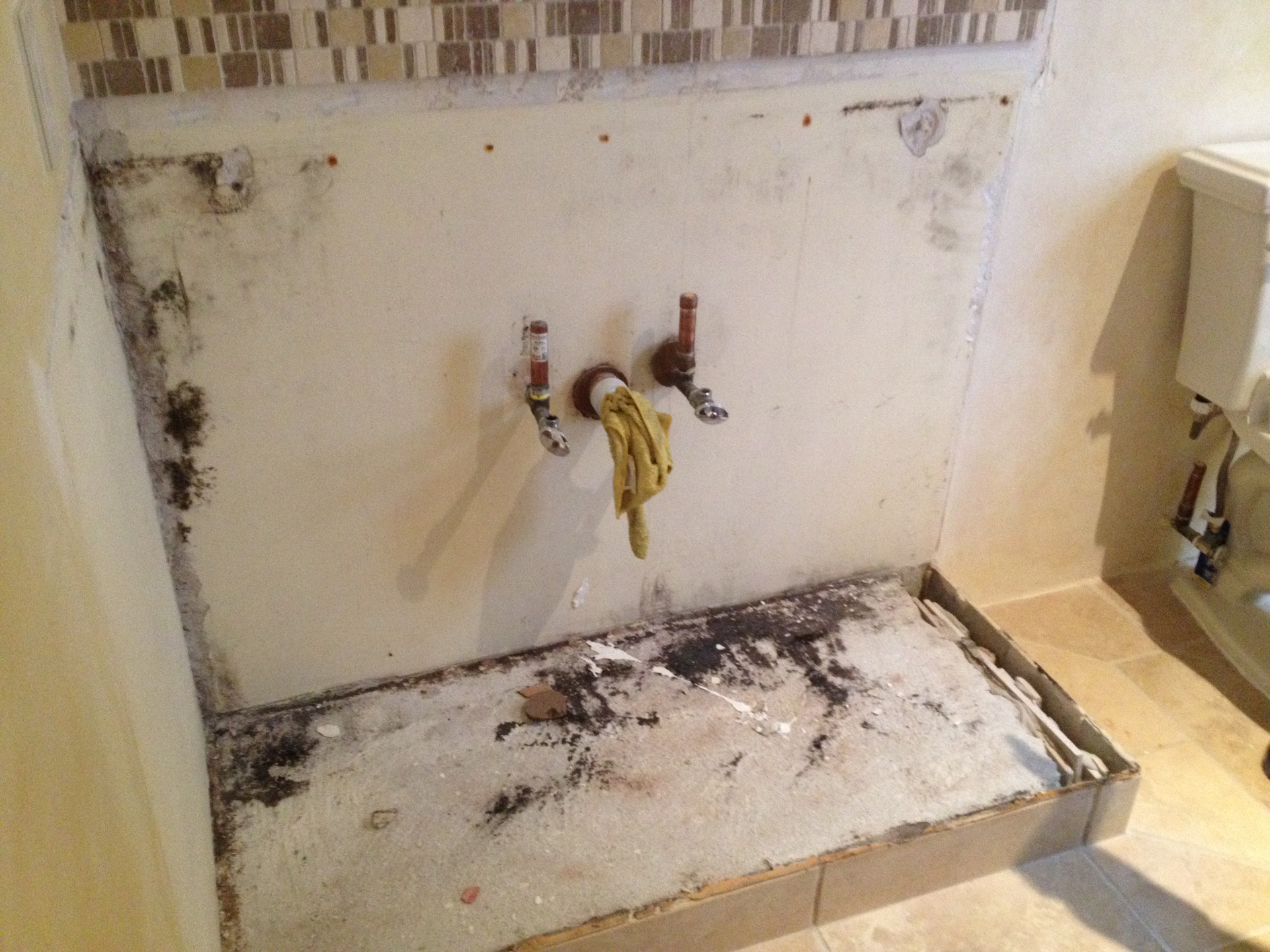
Black spots keep coming back in the bedroom ceiling corner, behind the bed and inside the closet. In most concrete apartment buildings in Los Cabos, the cause is one of two things, and often both: moisture trapped inside, or rain driven through the walls from outside.
Concrete buildings are sealed boxes
Cinder block and concrete buildings are very airtight, and most condos here have no mechanical ventilation at all. Fresh air comes in only when someone opens a door or window. Every day, breathing, showers, cooking and laundry add liters of water vapor to the air. With nowhere to go, it builds up, and indoor humidity stays well above the 60% level where mold starts to thrive.
Cold spots turn humidity into water
Air conditioning cools the concrete. Columns, beams and slab edges run even colder than the block walls around them, and so do corners and the wall behind a bed or wardrobe where air doesn't move. When a surface drops to the air's dew point, moisture condenses on it. In the humid season, the outdoor dew point here can reach 22–26 °C, so a wall cooled by a mini-split set to 23 °C is right at the edge. Mold doesn't even need visible droplets. A surface that stays damp for long periods is enough.
Finishes that make it worse
Vinyl wallpaper and glossy paints on exterior walls trap moisture against the concrete. "Anti-mold" paints only hide the problem for a season or two, because their biocides wash out while the moisture stays.
Wind-driven rain: when the walls themselves let water in
Cinder block is porous. Unless the exterior is sealed, it soaks up rainwater the way a sponge does. In normal rain, most of the water runs down the face of the building. During chubascos, tropical storms and hurricanes, strong winds drive raindrops into the walls at high speed, and the wind pressure pushes water into every pore, hairline crack and joint. The weak points are predictable:
- Cracked stucco, especially where block walls meet the concrete columns and beams (the two materials move differently, so cracks open along the frame)
- Window and door perimeters with failed sealant or no sill flashing
- Balconies and terraces sloping toward the building, or with clogged drains
- Parapets and roof edges on the top floor
- Exterior paint that has worn thin or was never water-repellent
Once water gets into the block, it can take weeks to dry. Meanwhile it wets the interior plaster and keeps the wall cold, which makes condensation worse too. The two problems feed each other.
Condensation, rain or leak? Read the pattern
- Condensation: corners, the ceiling-wall line, behind furniture, closets on exterior walls; worse in the humid season and in closed-up units.
- Wind-driven rain: exterior walls on the side facing the storms, around windows, along column and beam lines, top floors and building corners; appears or grows after storms.
- Plumbing leak: a single localized stain, the same spot on several floors stacked vertically, near bathrooms or kitchens.
How we find the real cause
A proper inspection measures instead of guessing: moisture mapping, thermal imaging to find cold bridges, and 72-hour logging of CO₂, humidity and temperature, plus a visual survey of the exterior envelope (cracks, sealant, flashing and drainage) to find where rain is getting in. Healthy targets are CO₂ below 1,000 ppm and relative humidity of 40–55%. Comparing the dew point with wall surface temperatures shows exactly where and why condensation forms. Lab sampling confirms what is growing.
Simple habits that help
Run bathroom exhaust fans (and install them if you don't have any). Vent the kitchen hood outside. Use your AC's "dry" mode or a dehumidifier to keep humidity below 60%. Keep furniture 5–10 cm away from exterior walls. Never leave a unit closed up for months without dehumidification.
Seeing mold in your condo?
Message us on WhatsApp at +52 624 141 6627 for a professional inspection with real measurements, photos and lab results.
Jose Lima — Founder, ProZone
OSHA & Cal OSHA certified mold inspector. Serving Los Cabos and Todos Santos since 2014. Member, National Ozone Technician Association.